
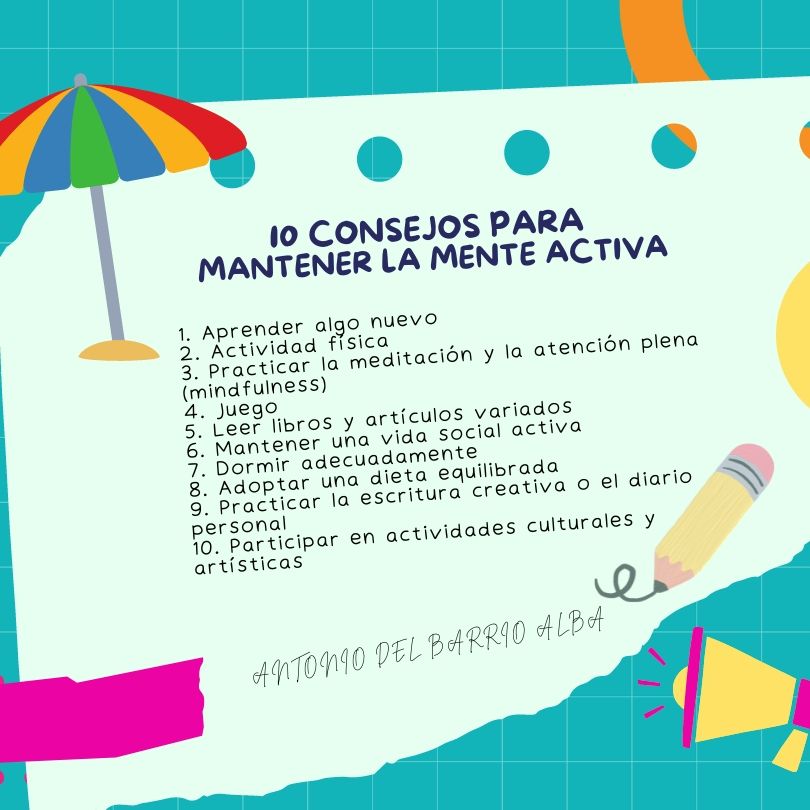
10 neuropsychology-based tips for keeping the mind active during the summer, based on scientific evidence
Antonio del Barrio, one of our neuropsychologists, shares with us these tips are based on neuropsychological research, which highlights the importance of keeping the brain active and healthy through a combination of cognitive, physical and social activities. Maintaining these habits during the summer can help prevent cognitive decline and promote optimal brain health. These tips are universal, but with more time available in the summer, the chances of putting them into practice are greater than at other times of the year.
- Learning something new: Studying a new language, taking an online course or learning to play a musical instrument can help stimulate the brain and form new neural connections. Continuous learning has been shown to improve neuroplasticity, the brain’s ability to adapt and change.
- Physical activity: Regular exercise, such as walking, swimming or yoga, increases blood flow to the brain and promotes the release of neurotrophic factors, such as BDNF (brain-derived neurotrophic factor), which are essential for brain health and neurogenesis.
- Practice meditation and mindfulness: Meditation and mindfulness can improve attention, working memory and reduce stress. Studies have shown that these practices increase the thickness of the prefrontal cortex, a brain region associated with decision-making and executive control.
- Games: Solving crossword puzzles, Sudoku puzzles, jigsaw puzzles or playing strategy games such as chess can improve cognitive functions, especially memory, attention and logical reasoning skills.
- Reading a variety of books and articles: Regular reading stimulates the imagination, improves memory and concentration, and can even increase neural connectivity. Reading a variety of genres (mainly fiction -novels-) and topics also increases knowledge and vocabulary.
- Maintain an active social life: Interacting with friends and family can improve cognitive function and reduce the risk of cognitive decline. Socialization promotes the release of oxytocin, which may have protective effects on the brain.
- Adequate sleep: Sleep is crucial for attention and memory consolidation. Maintaining a regular sleep schedule and making sure you get 7-9 hours of sleep per night can improve cognitive function and overall brain health.
- Adopt a balanced diet: Eating foods rich in antioxidants, omega-3 fatty acids, vitamins and minerals can improve brain health. The Mediterranean diet, rich in fruits, vegetables, fish and olive oil, has been associated with a lower risk of cognitive decline.
- Practice creative writing or journaling: Writing can improve memory, planning skills and emotional expression. Creative writing and journaling also help organize thoughts and process experiences.
- Participate in cultural and artistic activities: Attending museums, theaters, concerts or art exhibits can stimulate the mind and provide new sensory and cognitive experiences. Participation in artistic activities, such as painting or playing an instrument, can also have cognitive benefits.

Antonio del Barrio Alba
Neuropsychologist