
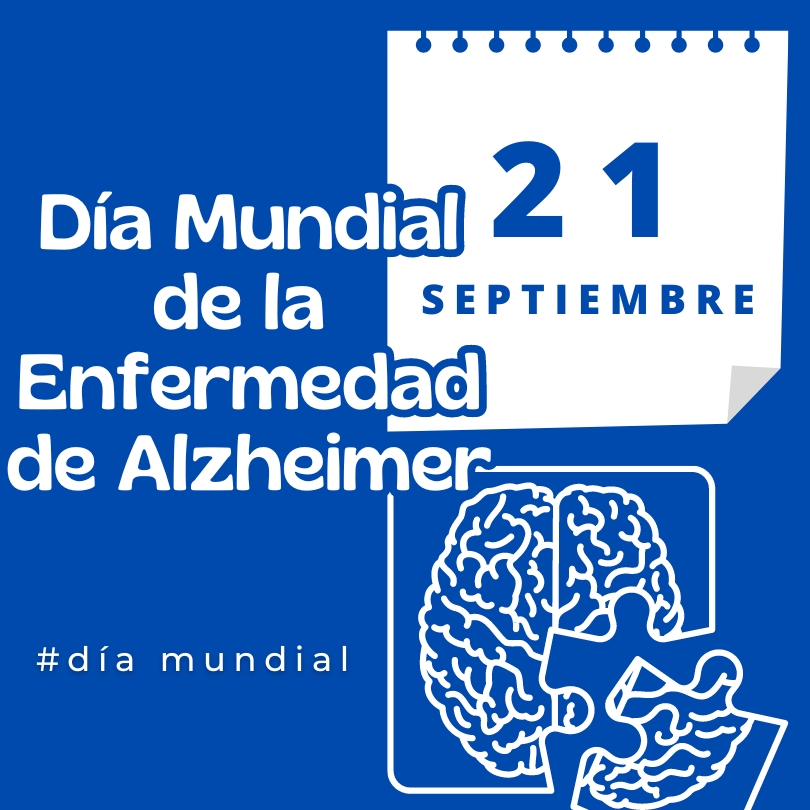
September 21 is World Alzheimer’s Day.
This World Alzheimer’s Disease Day seeks to raise awareness of the disease among the population and the authorities, with the aim of disseminating the real needs of patients and their families, encouraging research into future treatments and promoting prevention campaigns that emphasize potentially modifiable risk factors.
Although with age it is common to experience certain cognitive changes, some of these are warning signs that should not be ignored, as they may represent an early symptom of Alzheimer’s disease or another neurodegenerative disease.
Here we present 8 symptoms that, if they appear, it would be advisable to request an evaluation by a neurologist in order to make an accurate diagnosis.
1. Memory loss that interferes with daily life.
One of the most frequent symptoms of Alzheimer’s disease, especially in the early stages early stagesis the forgetfulness of recently learned information. This can manifest as difficulty remembering important dates, events or appointments, repeating the same questions over and over again, losing things incessantly because of not remembering where they are kept, or continually using reminders for any daily task.
What symptoms are usually not important?
Occasional and sporadic forgetfulness of an event or name of a person, and remembering them later.
2. Difficulty with problem solving and planning.
Some people with Alzheimer’s disease may find it difficult to organize and follow a plan to deal with a task that is out of the routine. For example, it may be more difficult to deal with unexpected and novel situations, plan a trip or follow the steps of a new cooking recipe. It may take longer to adapt to tasks that used to be executed quickly and smoothly.
What symptoms are usually not important?
Occasionally making a mistake when handling finances or invoices, especially if the volume of work is high.
3. Difficulty completing routine tasks.
Sometimes people with Alzheimer’s disease or another neurodegenerative disease may find it difficult to drive to familiar places, organize the grocery list, manage bills and bank accounts, keep the house clean, or follow the rules of previously learned board or card games.
What symptoms are usually not important?
Need occasional help with new appliances, electronics or mobile applications.
4. Disorientation in time.
It is very common for people with Alzheimer’s disease to lose track of the passage of time, and there may be problems in remembering the current date. On other occasions there are problems to temporally relate facts and events, confusing events that occurred years ago with other more recent ones.
What symptoms are usually not important?
Not accurately remembering the exact day of the month, especially if we miss it by one or two days and then realize the mistake.
5. Spatial disorientation.
Alzheimer’s disease may cause the person to feel disoriented in familiar places, expressing strangeness about how they got there or finding it difficult to find their way home. This may lead the person to get lost while walking or driving.
What symptoms are usually not important?
Habitually using the GPS to drive or mistaking the exit of the road we were supposed to take.
6. Problems interpreting images or visual information.
Sometimes the first symptom of Alzheimer’s disease is a difficulty in interpreting special relationships between one or more objects. This can lead to difficulties in reading (inability to follow the line of text or to join letters in words) or problems in judging distances, resulting in the appearance of new problems in driving, parking or drawing.
What symptoms are usually not important?
The development of presbyopia or loss of vision due to cataracts.
7. Changes in language.
People with Alzheimer’s may experience difficulty in recalling the name of an object, even if they know what its function is and what it is for. They may experience “blocks” when speaking, having to use generic terms such as “thing” or “this” and take striking detours to explain themselves. Sometimes they may change the syllable order of words or even be unable to convey an idea.
What symptoms are usually not important?
Experience the subjective feeling of having a word on the “tip of your tongue”.
8. Changes in mood and personality.
The existence of a striking change in the way of being or the development of psychiatric problems is a warning sign of the possibility of a neurodegenerative disease, especially if there have never been mental health problems before. From the early stages, people with Alzheimer’s may appear apathetic, anxious, irritable, fearful or depressed, without a clearly identified cause.
What symptoms are usually not important?
Feeling sad and depressed for a while in the face of bad news.
If you experience any of these circumstances or identify them in a family member, it is normal to feel concerned or confused about what to do next. Discussing these symptoms with a neurologist can help rule out a neurological disease as the cause of the problems, or, conversely, guide the early diagnosis of a neurodegenerative entity.

Dr. Victor Blanco
Assistant neurologist Memory Unit