
Video EEG, an essential tool for the diagnosis and treatment of epilepsy
(Madrid. Lucila Rodríguez)
The choice of treatment for epilepsy is one of the keys to the successful control of the disease and its prognosis, although in order to achieve this it is necessary to detect it early and effectively. For this purpose, there are several tests that help to properly diagnose patients and, among them, the electroencephalogram (EEG) with video (also known as video EEG) is the most complete and efficient.
This is a technique that combines electroencephalogram with video recording and makes it possible to study the electrical activity of the brain of a person with epilepsy, or other neurological disorder, while performing activities or experiencing certain visual stimuli.
“Complementing the EEG, a very valuable complementary test in Neurology, with video recording and taking into consideration the type of recording electrodes used (electrode cap or disk electrodes), as well as the time it takes to obtain data (which can vary from 20 to 30 minutes to several days), is essential to obtain optimal performance of the test and an adequate diagnosis”, explains Dr. Álvaro Beltrán Corbellini, associate neurologist at the Epilepsy Unit of the Neurology Service of the Ruber International Hospital.
This test evaluates both the baseline electrical tracing that reflects the brain bioelectrical activity during wakefulness and sleep, as well as the presence of epileptic seizures (including the most subtle, nocturnal or electrical), and the existence of epileptiform activity, i.e., abnormal electrical activity that does not correspond to a seizure but that evidences the risk of having one or the presence of a possible underlying epilepsy.
There are several video EEG tests:
- one in which an electrode cap is worn for 20 to 30 minutes and which is usually used in an emergency setting and for the differential diagnosis of states of decreased consciousness or confusional syndromes.
- another that lasts 24 hours and is usually used in non-emergency situations, to differentiate epilepsy from other pathologies, to quantify seizures, to record epileptiform activity and to characterize the disease.
- and another used in cases of surgery and in which the patient has to be hospitalized for 3 to 5 days.
It is precisely the latter case that generates the greatest concern among patients because of the time they have to spend in hospital, as explained by Petri Gómez-Sánchez, a nurse in the Epilepsy Unit of the Neurology Service of the Ruber Internacional Hospital.
“The first day we The patient admitted to our unit is usually quite nervous because of the fear of having a seizure that is too strong due to the lowering of medication. However, as the days of admission go by, they become more relaxed because they are continuously monitored and accompanied by qualified personnel trained in this technique, as well as in the management of epilepsy.” he assures.
For the performance of this test, a highly qualified professional healthcare team is required to guarantee an adequate quality in the recording of the data obtained, as well as in the critical and post-critical examination of the patient.
“The video EEG is a test with a very high diagnostic value that allows a better approach to the treatment of people with epilepsy or other neurological pathologies. Its interpretation depends fundamentally on the indication for which it has been requested, the technical characteristics of the recording and the experience of the team interpreting it.”
adds Dr. Beltrán Corbellini.
All the professionals in the staff of the Epilepsy Unit of the Neurology Service of the Ruber Internacional Hospital are highly qualified in the management of this test and in the approach to patients who undergo it, whatever the duration of the test.

Dr. Álvaro Beltrán Corbellini
Neurologist. Assistant of the Epilepsy Unit
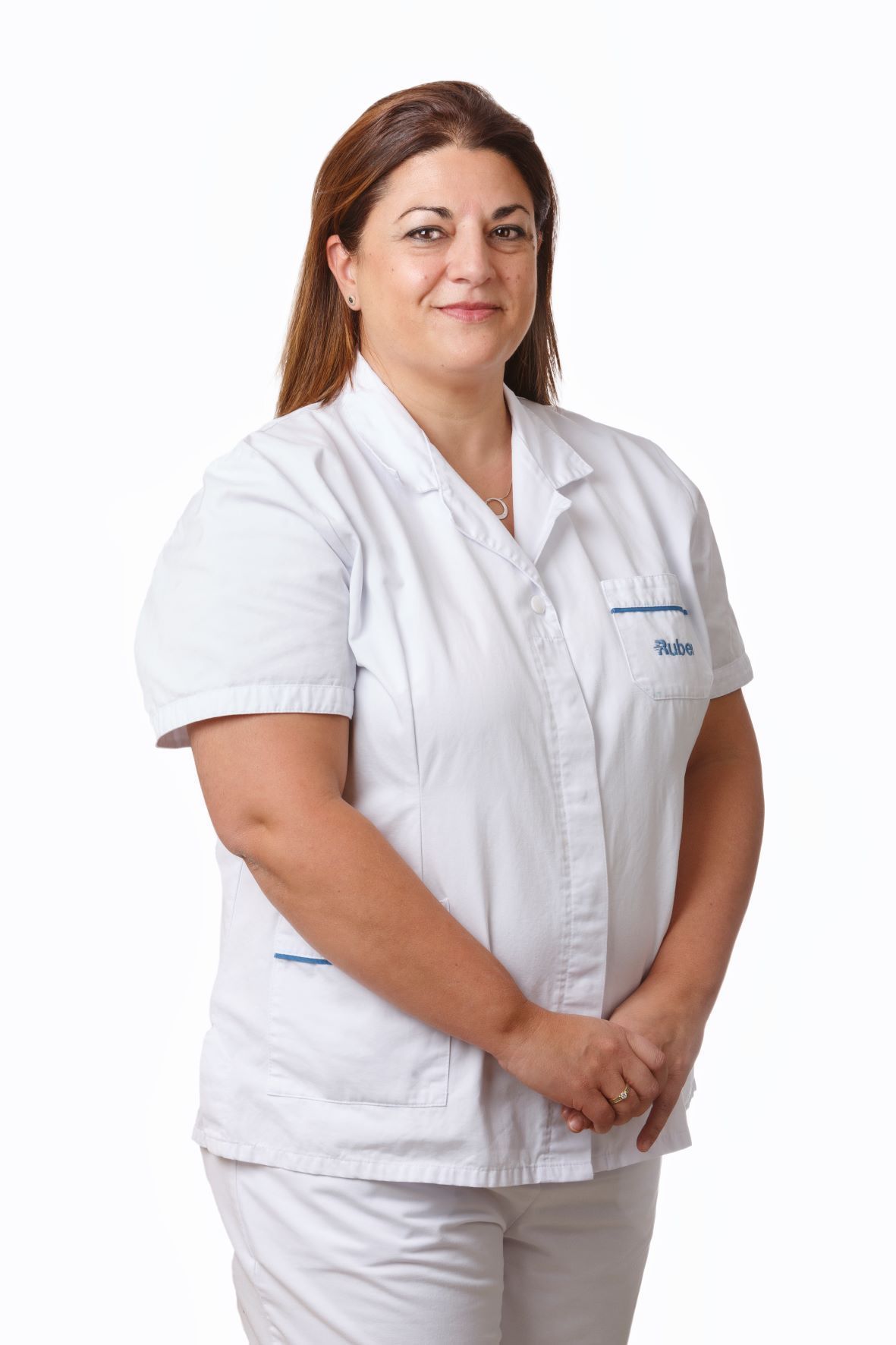
Petri Gómez Sánchez
Video EEG Nurse and Clinical Trials