
First crisis
GENERAL ASPECTS
When faced with a transient episode of altered neurological function, it is common for your physician to identify or consider that it is an epileptic seizure, produced by an abnormal electrical discharge in the brain.
Symptoms first crisis
The manifestations of epileptic seizures are very varied and usually last a few minutes. They may be subtle such as transient difficulty in speech, subjective disturbances in vision, hearing, sensation, olfaction or mood changes. At other times the manifestations are more obvious such as amnesia, confusion, abnormal movements or even present as an epileptic seizure with tonic-clonic activity (convulsion). During these episodes, people may be disconnected from the environment and persist in a state of confusion until several minutes later.
There are other diseases that can be confused with epileptic seizures, so it is advisable to conduct a proper interview to differentiate them. Syncope is a loss of consciousness caused by a transient decrease in blood flow to the brain, and the absence of other abnormal symptoms should be assessed. Transient ischemic attacks are caused by a thrombus in a cerebral blood vessel that dissolves, and usually produce transient loss of neurological function without abnormal movements. Migraines with aura may be associated with alterations in sensitivity or vision which, unlike crises, usually last longer and are accompanied by pain.
Diagnosis
When an episode of loss of consciousness, speech, memory or other neurological functions occurs, the diagnosis of epileptic seizures is considered.
Early diagnosis can have a positive impact on the course of the disease, and reduces uncertainty and anxiety. In the case of epilepsy, early diagnosis and treatment reduces the risk of recurrent seizures, which can be more severe in the absence of adequate treatment.
For this reason, at the Ruber Internacional Hospital, we have implemented protocols to diagnose, identify the cause and treat epileptic seizures and other similar episodes early (differential diagnosis). For this, we perform a comprehensive neurological evaluation, video-electroencephalography (VEEG) monitoring, 3 Tesla brain magnetic resonance imaging (MRI) with epilepsy protocol, and other tests that may be necessary in the first 24 to 48 hours.
With this, we increase the probability of early diagnosis of epileptic seizures and other similar diseases, reducing the risk of recurrence, their impact on health and quality of life. In addition, we provide a follow-up that allows us to assess whether in the subsequent evolution other symptoms arise that modify the diagnosis, the treatment or the recommended attitude.
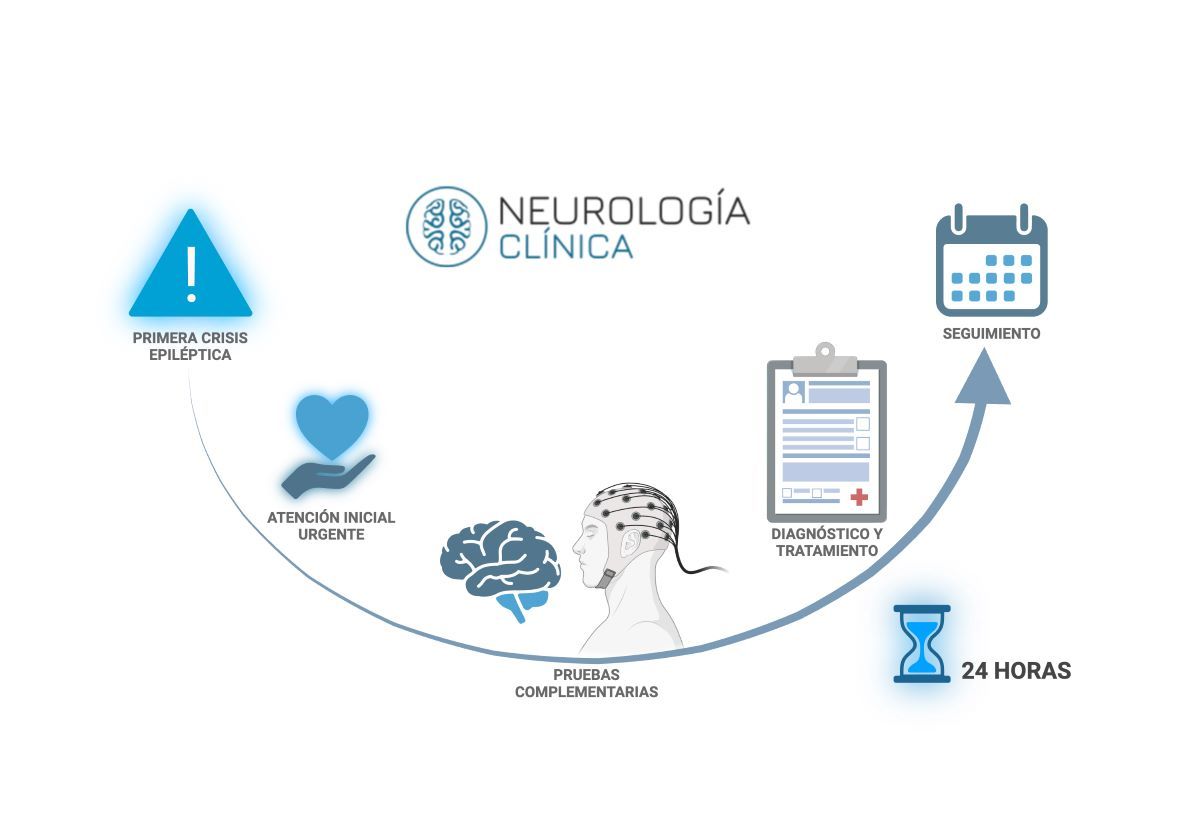
Acting early, accurately and with follow-up in expert hands is the best way to deal with seizures and seizure-like episodes.
Treatment
Early treatment can make a difference in prognosis and quality of life. A person with epilepsy is at greater risk of having seizures in the future, which could be stronger or occur in dangerous situations, and temporarily restrict driving. In these cases it is advisable to propose a personalized treatment that adapts to the background and circumstances of each person, seeking the best tolerance and comfort to achieve the best control of their seizures. For this purpose, there are many effective drugs, but there are also more advanced techniques with interventions (some of them surgical), which allow control in more complex cases.
In the Neurology Service of the Ruber Internacional Hospital we know the uncertainty of not understanding a diagnosis, not knowing the risks involved and what can be done to improve. A clinical history that is not very thorough can overlook fundamental data, and waiting for complementary tests that do not provide more information can cause great exhaustion. Therefore, in our neurology service we are committed to clinical excellence by combining the most advanced knowledge and means with the intention of bringing you understanding, confidence and clarity. If you have had any abnormal symptoms that you think may have been an epileptic seizure, do not hesitate to make an appointment with us.
Dr. Álvaro Beltrán
How to react to an epileptic seizure?

Dr. Gil-Nagel
Epilepsy Unit Director

Dr. Beltran
Assistant Epilepsy Unit

Dr. Rodriguez
Assistant Clinical Neurology Unit
Specialists
Meet our extensive team
What are we dealing with?
Specialized professionals
Request an appointment
Contact us