
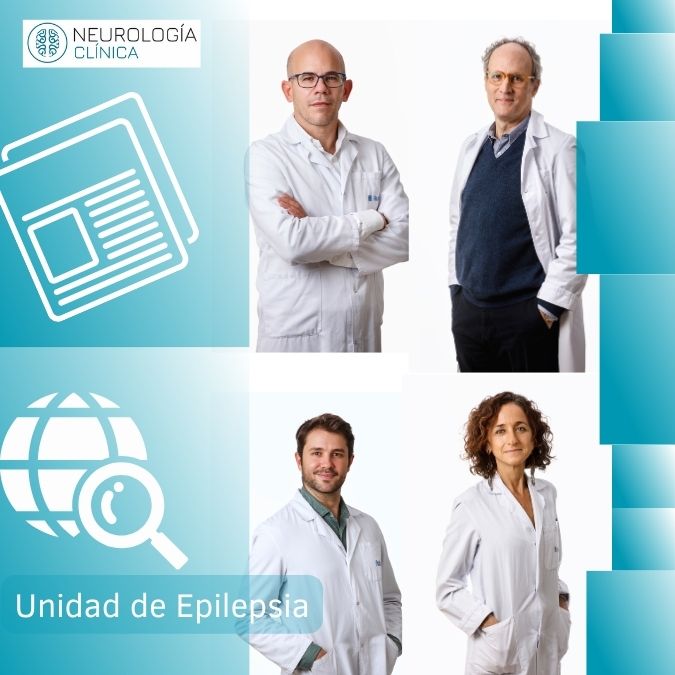
The Epilepsy Unit successfully treats 15 patients with MOGHE epilepsy.
(Madrid. Lucila Rodríguez)
The Epilepsy Unit of the Neurology Department of the Ruber International Hospital, directed by Dr. Antonio Gil-Nagel, has successfully treated 15 patients with mild cortical dysplasia with oligodendroglial proliferation (MOGHE), a type of epilepsy recently identified and described by a multidisciplinary team of medical professionals at the hospital.
It was in 2017 when the first scientific publication of this rare disease was made in the journal ‘Brain Pathology’ and, subsequently, in the ‘New England Journal of Medicine’, publications in which both Dr. Gil Nagel and Dr. Rafael Toledano participated.
Now in 2024, 15 patients with this type of epilepsy have been successfully treated thanks to early diagnosis and treatment, which has reduced the neuronal damage caused by epileptic seizures and improved cognitive development.
The decision of the most optimal treatment, mostly surgical, was made by a team composed of neurologists specializing in epilepsy, genetics, neurophysiology, radiology, nuclear medicine and experienced neurosurgeons such as Dr. Marcelo Budke. All of them have analyzed in detail the brain anatomy of each patient, thus making it possible to determine whether certain plasticity phenomena have caused alterations in vision, language or motor skills, among others.
Surgery usually leads to cognitive improvement and early seizure control, although it is not always possible. In these cases, the bioinformatic techniques of electrical source reconstruction implemented in the Epilepsy Unit by Dr. Rafael Toledano, based on electroencephalograms with enlarged assemblies (74 electrodes instead of 30), allow a precise resection of the most epileptogenic region within the lesion itself.
However, pharmacological treatment is also usually necessary and must be administered in a personalized manner, since not all antiepileptic drugs are equally effective. However, there are several clinical trials with more specific therapies aimed at this type of epilepsy that offer a more hopeful future for patients.